

What Is Crew Housing and Who Needs It?
- Mental Temper
- 2 days ago
- 6 min read

A crew gets sent to West Texas for a turnaround, a drilling program, or a construction push, and the first question comes fast: where is everybody staying? That is where crew housing comes in. If you are asking what is crew housing, the short answer is simple. It is temporary or extended-stay lodging set up for work crews who need clean, dependable, move-in-ready housing close to the job.
For workers, it solves the basics without wasting time. For employers and crew coordinators, it cuts down on the hassle of booking scattered hotel rooms, managing utilities, or finding short-term leases that do not fit the job schedule. Good crew housing is built around work realities - early shifts, changing timelines, group logistics, and the need for a decent place to rest after a long day.
What Is Crew Housing?
Crew housing is housing designed for groups of workers who are away from home for a project, rotation, contract, or assignment. It is common in oil and gas, pipeline work, construction, industrial maintenance, logistics, and utility work. These jobs often bring in workers from outside the immediate area, and they may need a place to stay for a week, a month, or longer.
Unlike a standard apartment, crew housing is typically furnished and ready to occupy right away. Unlike a basic hotel, it is set up with longer stays in mind. That usually means practical living space, predictable costs, and amenities that support day-to-day routines instead of overnight travel.
The term can cover a few different property types. In some markets it refers to man camps. In others, it may mean workforce lodging, furnished efficiency units, or extended-stay properties built for labor crews. The setup can vary, but the goal stays the same: give workers a safe, convenient, and comfortable place to live while the job is active.
How Crew Housing Works in Practice
Most crew housing is offered on flexible terms, often weekly or monthly. That matters because job schedules are rarely fixed for long. A crew may arrive for a short project that extends another month. A company may need to house ten workers now and add five more later. Flexibility is a major part of the value.
Move-in is usually simple. Workers do not need to furnish a unit, start utility accounts, or commit to a traditional lease. In many cases, the room or unit is ready with furniture, appliances, WiFi, utilities, and housekeeping support already included. That saves time on the front end and reduces surprise costs later.
For company-paid stays, crew housing also makes coordination easier. Instead of placing workers in multiple hotels across town, employers can keep teams in one location. That helps with transportation, communication, scheduling, and overall consistency. When the crew is housed together and close to the work zone, there is less friction in the day-to-day operation.
Who Typically Uses Crew Housing?
Crew housing is built for working adults who need practical lodging, not vacation accommodations. In the Permian Basin, that often includes oilfield crews, drilling teams, frac support personnel, welders, electricians, construction workers, CDL drivers, mechanics, inspectors, and industrial contractors.
It is also useful for supervisors and housing coordinators who are booking rooms for an entire team. They are usually looking for three things at once: dependable availability, simple billing, and living conditions that workers will actually tolerate for more than a few nights. A cheap rate on paper does not help much if workers are spread out, uncomfortable, or too far from the job.
Individual workers use crew housing too, especially when they are relocating temporarily, starting a new assignment, or waiting on permanent housing. In those cases, furnished workforce lodging can fill the gap without requiring a long lease or major upfront expense.
What Is Usually Included in Crew Housing?
This depends on the property, but better crew housing tends to include the basics that workers and employers need most. Furnished units are standard. Utilities are often included. Internet access matters because workers need to stay in touch, handle personal business, and unwind when the shift ends.
Housekeeping is another common feature, especially in workforce-focused properties. That helps maintain clean living conditions without placing the whole burden on residents who may be working long hours. Laundry access, parking, gated entry, and on-site management also make a real difference.
Some properties go further by adding amenities that support longer stays, such as fitness areas, recreation spaces, community rooms, or meeting space. Those details may sound secondary at first, but they matter more when workers are living on-site for weeks or months. A place that supports rest and routine can make a long assignment more manageable.
Crew Housing vs. Hotels, Apartments, and Man Camps
People often use these terms interchangeably, but there are real differences.
A hotel works well for a short stay, especially a night or two. But if a worker is staying for weeks, hotel rooms can feel cramped, repetitive, and expensive. Costs may fluctuate, and the setup is not always built for shift workers or employer-managed group bookings.
A traditional apartment gives more privacy and stability, but it often comes with a lease, deposits, utility setup, and furniture needs. That can slow everything down, especially if the assignment is temporary or the move-in timeline is immediate.
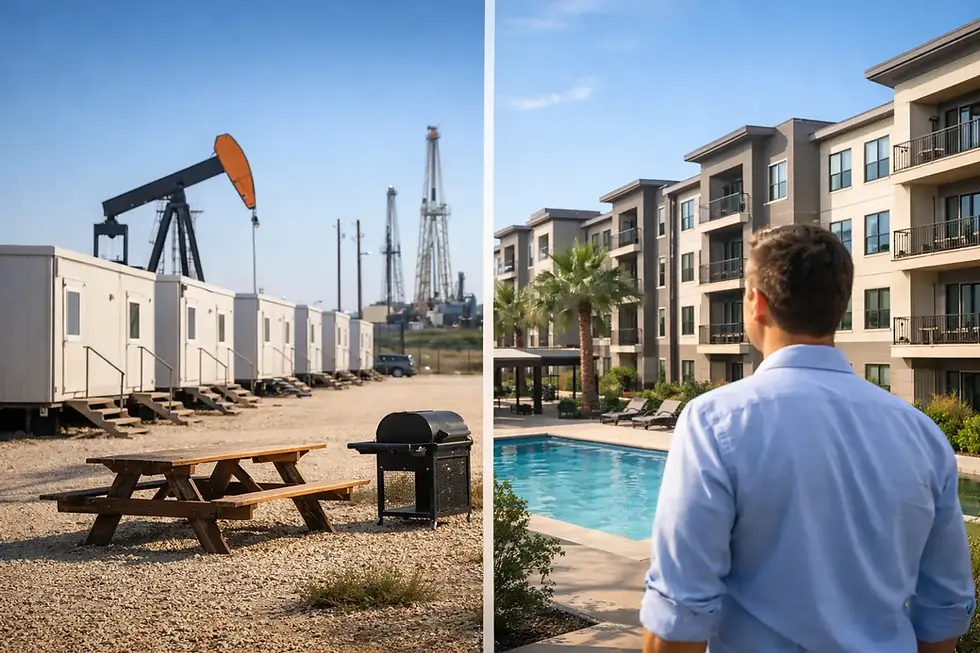
A man camp is one form of crew housing, usually associated with workforce lodging in oilfield regions. Some are very basic and strictly functional. Others offer a stronger living experience with private or semi-private units, better amenities, and a more residential feel. That difference matters. Not every worker wants the bare minimum, and not every company wants housing complaints from the crew.
Crew housing sits in the middle. It is more practical and flexible than a standard apartment, and more livable for longer stays than a basic hotel. The best options combine efficiency with comfort.
Why Crew Housing Matters in the Permian Basin
In the Permian Basin, housing is not a side issue. It is part of keeping a job moving. Workforces shift quickly. Projects scale up fast. Crews may come in from other parts of Texas or from out of state. When housing is hard to secure, too far from the site, or inconsistent in quality, it creates problems that ripple through the operation.
Reliable crew housing helps reduce those disruptions. Workers can get settled quickly. Supervisors spend less time dealing with room issues or scattered bookings. Companies can better manage transportation and scheduling when teams are staying in one dependable location.
There is also the human side of it. After a long shift, workers need a place that feels safe, clean, and comfortable enough to recover before the next day starts. If the housing is noisy, run-down, or poorly managed, morale drops fast. That can affect retention, attendance, and overall job performance.
That is why many employers look beyond the lowest nightly rate. They want housing that supports productivity and helps crews stay steady through the full assignment.
What to Look for When Choosing Crew Housing
If you are booking for yourself, focus on the basics first. Is it furnished? Are utilities and WiFi included? Is the property close to your work area and major roads? Can you move in without a long approval process or large upfront costs?
If you are booking for a team, think bigger than the room itself. You need a property that can handle group stays, communicate clearly, and provide a consistent experience across units. Parking, security, housekeeping, and flexible terms all matter. So does whether workers have access to spaces where they can reset after work instead of feeling boxed into a bare room.
It also helps to ask how the property is set up operationally. Some locations are built specifically for workforce stays and understand how to serve rotating crews. Others are general rentals trying to accommodate worker housing on the side. The experience is not always the same.
In West Odessa, properties like Mesquite Oasis are designed around that workforce need, with furnished efficiency units, weekly and monthly rental options, all utilities included, and amenities that support both convenience and comfort for longer stays.
Is Crew Housing Right for Every Situation?
Not always. If someone is in town for one night, a hotel may be the simpler choice. If a worker is relocating permanently and wants a conventional home base, an apartment or house rental might make more sense.
But for temporary assignments, rotating shifts, project-based work, and employer-booked team lodging, crew housing is often the most practical fit. It reduces setup time, keeps costs more predictable, and gives workers a place built around the realities of the job.
That is really the answer to what is crew housing. It is not just a bed near a worksite. At its best, it is a housing solution that makes the work easier to support and the stay easier to live with.
When the schedule is tight and the crew needs a place now, the right housing choice is usually the one that lets everyone get settled quickly, rest well, and get back to work without extra complications.


Comments