

Best Oilfield Housing Options in Odessa
- Mental Temper
- 4 days ago
- 6 min read

When a crew gets to Odessa after a long day on the road, housing is either one less problem to deal with or the start of a bigger one. That is why oilfield housing options matter more than price alone. The right setup affects sleep, commute time, crew morale, scheduling, and how easily a company can keep people focused on the job.
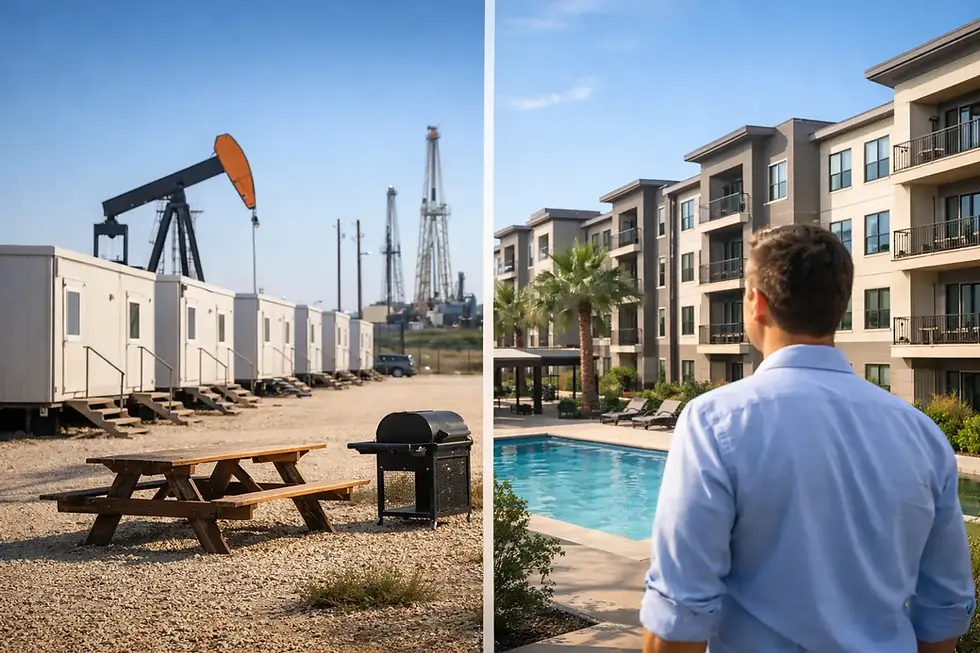
In the Permian Basin, workers and employers usually sort through a few common choices. Hotels may work for short stays, traditional apartments can fit longer assignments, and man camps or workforce housing properties are often built for the realities of field work. The best option depends on how long the stay will be, how many people need rooms, what level of privacy matters, and whether the property is set up for shift-based living.
What workers need from oilfield housing options
Oilfield work is not nine to five, and housing should reflect that. A place can look affordable on paper and still create problems if it adds a long commute, has inconsistent housekeeping, poor parking, weak security, or extra utility costs that keep stacking up.
Most workers are looking for the same basics. They want a clean furnished unit, reliable WiFi, a comfortable bed, working air conditioning, laundry access, and a quiet place to recover between shifts. For crew coordinators and employers, the priorities widen a bit. They also need predictable billing, flexible weekly or monthly terms, simple move-ins, and enough capacity to house teams without juggling multiple properties.
That is why all-inclusive housing tends to stand out in West Texas. When utilities, furnishings, and core amenities are already built into the rate, there is less back-and-forth and fewer surprises. For companies housing multiple workers, that kind of predictability saves time as much as money.
The main oilfield housing options in Odessa
Hotels and extended-stay hotels
Hotels are usually the fastest option when someone needs a room immediately. They work well for one person staying a few nights or for a very short assignment. Front desk service and daily turnover can be helpful, especially if plans may change quickly.
The trade-off is cost and consistency. Hotel rates often climb during busy periods, and what starts as a short stay can get expensive fast. Standard hotel rooms are also not always ideal for workers on longer assignments who need a more residential setup, dependable parking, or a better balance between privacy and practical amenities.
Extended-stay hotels solve part of that problem by offering kitchenettes and longer booking terms. Still, they often feel temporary, and the total cost can end up higher than dedicated workforce lodging once the stay stretches beyond a week or two.
Traditional apartments
A regular apartment can make sense for a worker relocating for several months or longer. It offers more independence and can feel more like home. For some residents, that extra space is worth it.
But apartments come with friction that many oilfield workers and employers would rather avoid. Leases, deposits, utility setup, furniture needs, internet installation, and application timelines can slow everything down. If a company is trying to house a crew quickly, traditional apartments are often too rigid. They are usually better for long-term personal housing than for fast-turnaround workforce lodging.
Bare-bones man camps
Basic man camps remain a familiar option across oil and gas regions because they are designed around workforce demand. They can offer proximity to job sites and simpler booking than apartments. For some teams, that is enough.
The downside is that not every man camp offers the same standard of comfort, privacy, or amenities. Some are built for pure function and little else. That can work for very short stays, but over time it can wear on workers. When housing feels cramped, noisy, or poorly maintained, morale tends to follow.
Furnished workforce housing communities
For many workers in Odessa, this is the middle ground that makes the most sense. A furnished workforce housing property combines the practicality of a man camp with the comfort of an extended-stay living setup. Units are move-in ready, terms are usually weekly or monthly, and utilities are already included.
This option tends to fit both individuals and employer-sponsored crews because it reduces setup time while giving residents a more stable place to live. A property with gated access, housekeeping, recreation areas, fitness space, and room to unwind after work can make a real difference, especially on assignments that last more than a few days.
How to compare housing without wasting time
The fastest way to sort through oilfield housing options is to look past the headline rate and focus on how the property operates day to day. A lower weekly number does not help much if residents need to pay separate utilities, bring furniture, handle setup fees, or stay in a place that adds stress after every shift.
Start with stay length. If the job is measured in days, a hotel may be fine. If it is measured in weeks or months, furnished workforce housing usually offers a better mix of cost control and livability. Then look at what is included. Fully furnished units, WiFi, utilities, housekeeping, parking, and on-site amenities all affect the real value of the rate.
Location matters too, but not just in terms of miles. Easy access to major roads, job corridors, and basic retail saves time every week. Secure gated access can also matter more than people expect. Workers coming and going at odd hours need a property that feels controlled and dependable.
Finally, think about what happens after the shift ends. A place where workers can rest, cook or store food, do laundry, exercise, and spend downtime in a decent common area supports retention better than a room that only checks the box for shelter.
Why amenities matter more than some buyers expect
There is a tendency to treat workforce lodging as purely functional, but field crews know better. Better housing does not mean luxury for the sake of it. It means the property helps people recover, stay organized, and show up ready to work again.
A furnished efficiency unit with utilities included removes setup hassles. Housekeeping helps keep living spaces in order during busy work stretches. WiFi matters for staying in touch with family, handling personal business, and unwinding. Fitness and recreation spaces give residents an outlet that can improve morale on longer stays.
That is one reason many employers have moved away from the cheapest available room and toward housing that supports performance. If better accommodations reduce turnover, complaints, or missed rest, they are serving an operational purpose. In a demanding work environment, comfort is not separate from productivity.
What works best for crews and workforce managers
If you are housing multiple workers, consistency becomes the priority. Scattering a crew across different hotels or apartments makes transportation, communication, and billing harder than it needs to be. A single property with enough available units, simple terms, and one point of contact is usually easier to manage.
Weekly and monthly rentals are especially helpful when project timelines shift. No-deposit entry can also reduce friction when a company needs to place workers quickly. For managers, all-inclusive pricing simplifies approval and accounting. For workers, it means they can move in without spending time setting up services or chasing down essentials.
In West Odessa, properties that combine furnished units with shared amenities and controlled access often provide the best balance. They are practical enough for company housing needs but comfortable enough that workers do not feel like they are just getting by. That balance is where a property like Mesquite Oasis fits the market well.
Choosing the right fit in the Permian Basin
There is no single answer for every assignment. Some stays are short, some crews are large, and some workers want the lowest upfront cost no matter what comes with it. But for many residents in Odessa, the best housing choice is the one that removes as many daily hassles as possible.
That usually means furnished space, flexible terms, included utilities, reliable internet, secure access, and amenities that support real downtime. It also means being close enough to work routes and daily necessities that life off the clock stays manageable.
A good housing decision should make the next week easier, not just get someone through tonight. When you compare oilfield housing options that way, the right choice becomes a lot clearer.


Comments